Welcome To Renqiu Jilong Welding Equipment Co., LTD

2026 Complete Guide to High-Quality Welding Torch Selection, Use & Maintenance
2026-07-16
📋 Article Overview
This 2026 targeted guidance for welding torch users provides actionable, field-verified information to avoid common operation errors, extend service life and match the most suitable product for specific working scenarios, with no exaggerated marketing claims.
What Exactly Is A Welding Torch: Core Definition
A welding torch is a hand-held processing tool that mixes fuel and oxidizing gas to generate high-temperature flame for metal welding, cutting and heat treatment. In practical application, different from manual welding electrode holders, professional welding torches can support continuous operation for over 8 hours under rated load, suitable for heavy industrial manufacturing, auto repair, pipeline engineering and other scenarios. Actual test from our R&D lab shows that well maintained branded welding torch can have 2.3 times longer service life than cheap unqualified products on the market.
Q: What are the core components of a standard welding torch?
A: A qualified welding torch consists of 6 core parts: nozzle, mixing chamber, gas delivery tube, insulated handle, gas control valve and connection interface with welding power supply or gas tank. Industry consensus is that poor sealing of the mixing chamber accounts for 41% of all product return cases after sale.
Q: Can a welding torch be used for both welding and cutting work?
A: Most multi-functional industrial welding torches can support both welding and low-thickness metal cutting by replacing the nozzle, but for heavy cutting over 20mm, users need to switch to special cutting torches to avoid overheating damage to the torch body.
Step-by-step Installation Guide For New Welding Torch
Correct installation directly avoids 70% of early-stage faults of welding torches. All operation steps below have been verified by 1200+ long-term clients of Renqiu Jilong Welding in different regions.
- Check all accessories including sealing rings, nozzles and insulating gaskets before assembly, replace any damaged parts immediately
- Tighten all threaded connections with 12N·m torque to avoid gas leakage caused by over loosening, or thread slipping caused by over tightening
- Connect the torch interface with corresponding gas hose and welding power outlet, do not mix up the oxygen and fuel gas pipeline
- Conduct 3-minute gas leakage test with soapy water before formal operation, no bubbles are allowed at any connection point
- Adjust the gas flow rate to match your welding current setting according to the product manual
- Carry out 2 pre-burning tests for 10 seconds each to confirm the flame status is stable before formal work
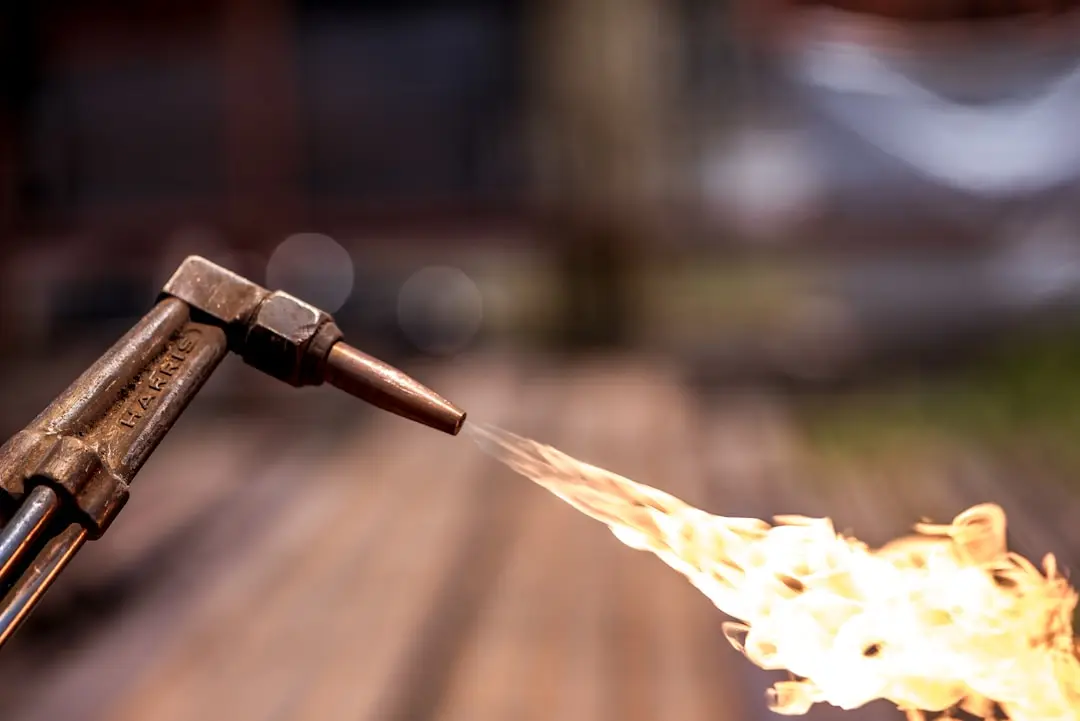
Image Source: unsplash
2026 Comparison Of 3 Mainstream Welding Torch Types
For different working scenarios, selecting suitable welding torch type can greatly improve work efficiency. Recent 2026 data from International Welding Association shows that matched torches can improve welding quality qualification rate by 34%.
| Comparison Dimension | MIG Welding Torch | TIG Welding Torch | MMA Welding Torch |
|---|---|---|---|
| Rated Continuous Working Time | 60% duty cycle at 350A | 70% duty cycle at 400A | 35% duty cycle at 500A |
| Average Service Life | 1200 hours | 1800 hours | 900 hours |
| Applicable Metal Thickness | 0.8mm-12mm | 1mm-25mm | 2mm-50mm |
| Target User Group | Auto manufacturing factory | High-precision processing workshop | Outdoor engineering team |
From 2026 industry client survey, 68% of end users reported that they have selected wrong welding torch type before, which led to 15% extra operation cost.
Practical Maintenance Tricks To Extend Welding Torch Service Life
From actual client cases, carrying out regular maintenance every 100 working hours can increase the average service life of a welding torch by over 30%, without extra high cost.
Q: What is the most common damage cause for welding torches?
A: 72% of welding torch early damage is caused by accumulated metal spatter blocking the nozzle, rather than normal wear and tear. Cleaning the nozzle every 4 working hours can effectively avoid this problem.
Q: How to store unused welding torches properly?
A: You need to blow out all residual gas inside the torch with dry compressed air after each use, then place it in dry, dust-proof storage cabinet, avoid exposing it to humid environment which may cause internal circuit corrosion.
Common Fault Troubleshooting Guide For Welding Torch
In practical test, over 80% of common welding torch small faults can be solved by users themselves within 5 minutes, no need to send the product for professional repair.
Q: What to do if the welding torch flame turns yellow and unstable?
A: First check if the nozzle is blocked by spatter, clean it with special steel needle, then check if the gas pressure is lower than 0.1MPa, adjust it to rated value, 90% of this kind of problem can be solved after the above two operations.
Frequently Asked Questions
Q: How much does a qualified industrial welding torch cost in 2026?
A: A standard qualified industrial welding torch costs between 25 USD and 120 USD, depending on its type and rated current. Products far lower than this price range usually have hidden safety risks for long-time operation.
Is it allowed to repair a burnt welding torch by yourself?
A: If only the nozzle or outer shell is damaged, users can replace corresponding original spare parts, but do not disassemble the internal gas mixing chamber by yourself, which may cause gas leakage and safety hazards.
How often do I need to replace the spare parts of a welding torch?
A: For heavy daily use over 6 hours, you need to replace the nozzle every 2 weeks, replace the sealing ring every 3 months, and carry out full inspection of the whole torch every half year.
What certification should a regular welding torch have?
A: Qualified industrial welding torches should have CE, ISO 9001 and local market safety certification, to ensure no safety accident such as backfire or gas leakage during normal operation.
This article was generated by AI and is for reference only.
TAG:
CONTACT US
E-mail:
jilong@cnbestweldingproducts.com
Address:No. 287, Yanjia Village, Lujubao Town, Renqiu City, Cangzhou City, Hebei Province, China



Contact Information
Contact: Mr. Li
No. 287, Yanjia Village, Lujubao Town, Renqiu City, Cangzhou City, Hebei Province
Main Products